What does this symptom mean?
One side of food overcooks while the other remains underdone, or results differ significantly between shelves. The symptom alone does not identify a failed part because several causes can produce the same behaviour. Proper diagnosis considers when the fault occurs, appliance model and whether it is constant or intermittent.
Likely causes
1. A stopped or weak convection fan
A stopped or weak convection fan. Similar symptoms can have different causes, so parts should not be replaced by guesswork.
2. A heating element working partially or not at all
A heating element working partially or not at all. Similar symptoms can have different causes, so parts should not be replaced by guesswork.
3. Crowded racks or a tray blocking airflow
Crowded racks or a tray blocking airflow. Similar symptoms can have different causes, so parts should not be replaced by guesswork.
4. An inaccurate sensor or heat loss through the door
An inaccurate sensor or heat loss through the door. Similar symptoms can have different causes, so parts should not be replaced by guesswork.
Safe checks before booking service
- Test with one tray on the middle shelf.
- Ensure trays do not block airflow openings.
- Observe fan rotation in the relevant mode without touching it.
- Visually inspect door and seal closure.
How a technician diagnoses the fault
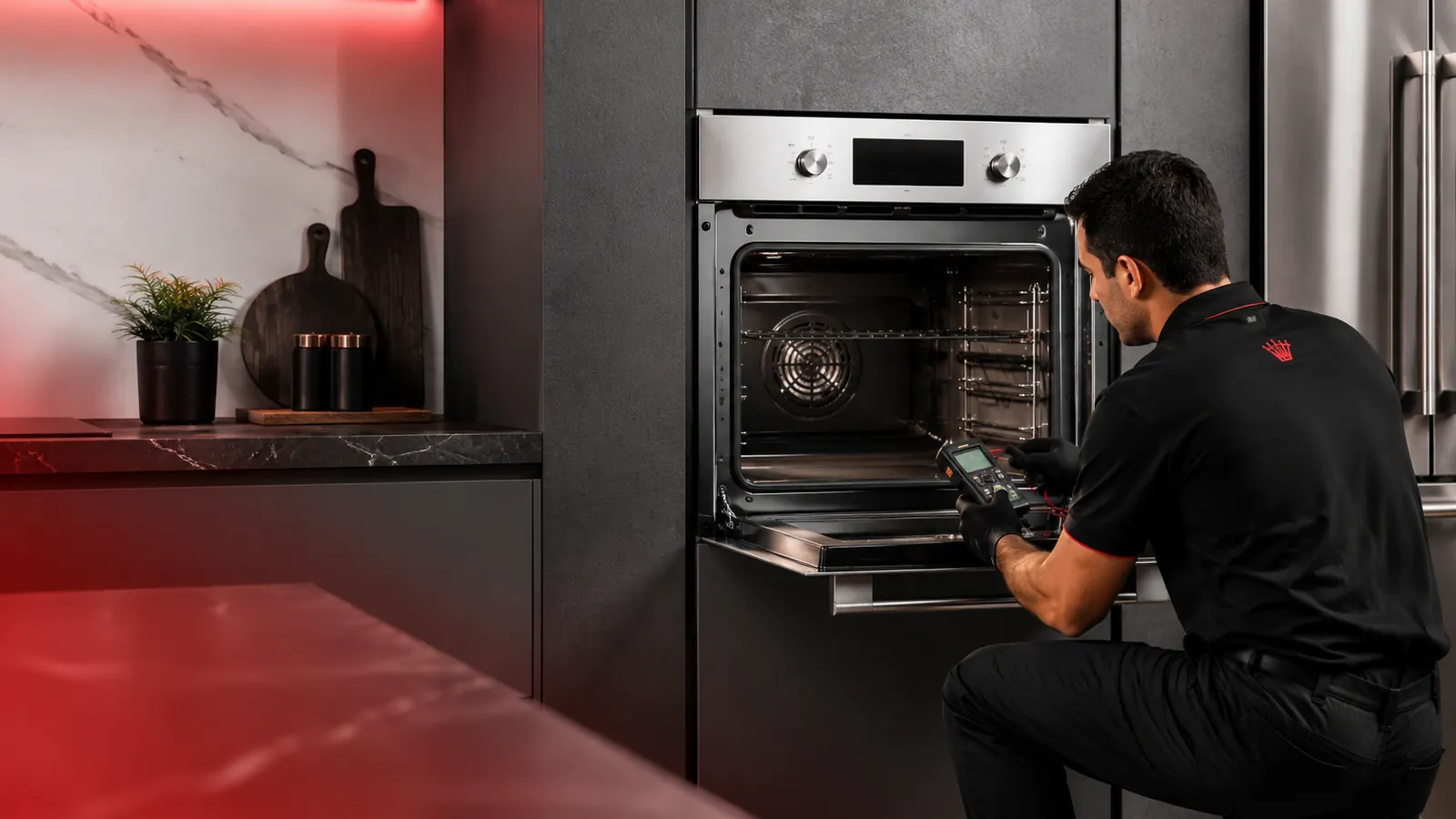
The inspection begins by confirming the reported behaviour and safely testing the affected function. The technician then compares operation with model specifications and measures related components where required. The purpose is to find the root cause rather than replace the first part associated with the symptom.
| Inspection stage | What is checked? |
|---|---|
| Confirm the symptom | Reproduce the fault and identify timing and affected function. |
| External inspection | Assembly, cleanliness, moving parts, ventilation and visible connections. |
| Technical measurements | Test model-specific components related to the fault. |
| Post-repair test | Operate the appliance and confirm safety and stable performance. |
Parts that may be related
Fan or motorHeating elementTemperature sensorSeal and hinges
This is a list of possibilities, not a final diagnosis. Any part must match the model number and inspection result because a similar appearance does not guarantee identical dimensions, connections or ratings.
How to reduce repeat faults
- Do not use the oven door as a shelf or apply weight to it.
- Keep airflow paths around the fan and racks unobstructed.
- Clean spills after cooling and keep liquids away from controls.
When to call Glem Gas maintenance
Call when the fault repeats after safe checks, when there is gas odour, abnormal heat or noise, or when access requires dismantling the appliance. Have the model number, symptom and governorate ready.